If you’ve ever stood in front of a spa menu wondering whether to book a “massage therapy” session or a “regular massage,” you’re not alone. The two terms get tossed around like they mean the same thing, but they don’t. One is built around clinical, problem-solving bodywork. The other is designed for stress relief, calm, and that wonderful melt-into-the-table feeling. Both have a place in a healthy life — the trick is knowing which one you actually need on any given day.
Below is a clear, no-jargon breakdown of how massage therapy and regular massage differ, when each one shines, and how to decide which one belongs on your calendar this month.
What Is Massage Therapy?
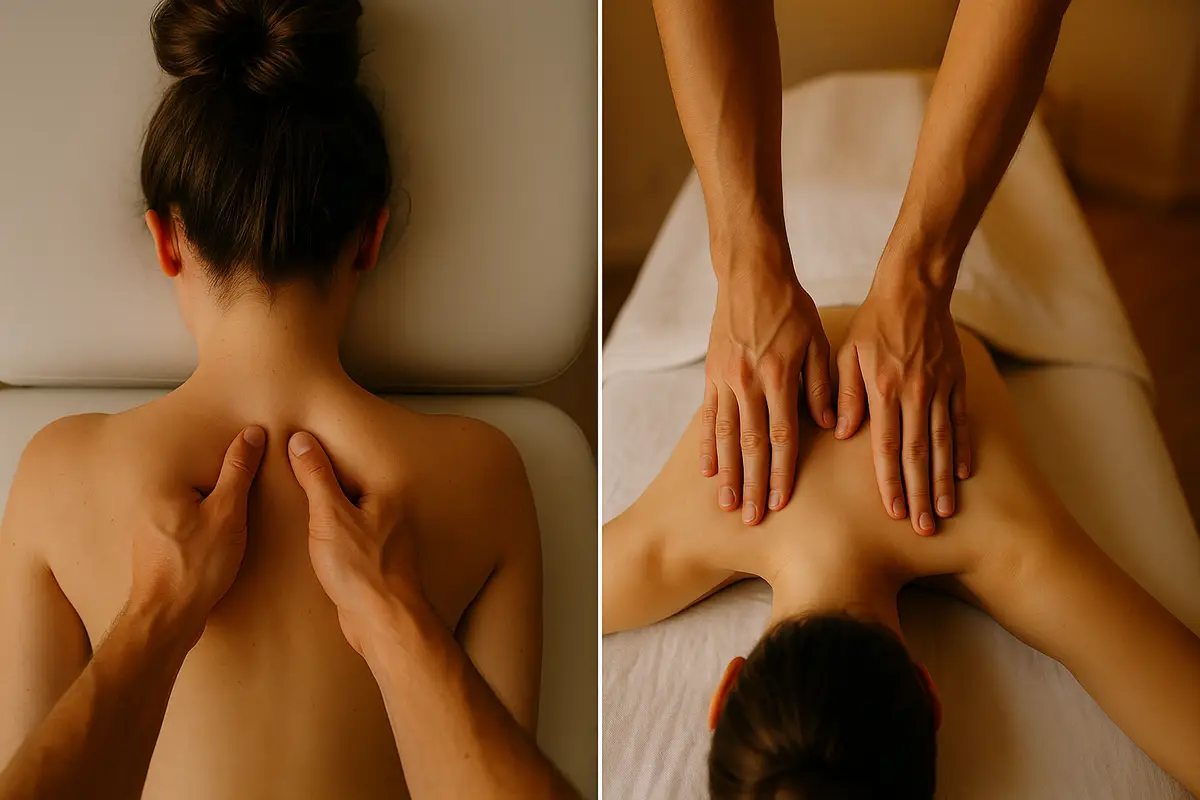
Massage therapy is a treatment-focused practice performed by a licensed massage therapist. It’s grounded in anatomy, physiology, and a working understanding of how muscles, fascia, and the nervous system respond to pressure and movement. Therapists complete formal training, pass state licensing exams, and often pursue continuing education in specific modalities — deep tissue, sports massage, myofascial release, neuromuscular therapy, prenatal work, and more.
The goal of a therapy session is functional. You arrive with a complaint — a stiff neck from desk work, a recurring lower-back pull, post-workout soreness, limited range of motion — and the therapist designs a plan to address it. Sessions typically include a brief intake, hands-on assessment, focused work, and sometimes homework like stretches or hydration tips.
What Is a “Regular” Massage?
A regular massage — often called a spa massage, relaxation massage, or Swedish massage — is designed primarily for comfort, stress relief, and a general sense of wellbeing. The pressure is usually lighter, the strokes are long and flowing, and the environment leans into mood: warm lighting, soft music, aromatherapy. You don’t need a specific issue to book one. You just need to be tired, stressed, or in the mood to feel cared for.
That doesn’t mean spa massage isn’t beneficial. Regular sessions improve circulation, lower cortisol, support better sleep, and reset a wound-up nervous system. They’re a form of preventive care — especially when stacked into a steady routine.
The Core Differences at a Glance
| What’s Being Compared |
Massage Therapy |
Regular Massage |
| Purpose |
Targets a specific concern: pain, injury recovery, mobility, posture |
Focused on relaxation, stress relief, and overall comfort |
| Pressure & Technique |
Deeper, focused pressure using trigger point release, cross-fiber friction, or myofascial work |
Lighter, gliding strokes and broad kneading meant to soothe |
| Practitioner Training |
State-licensed with hundreds of hours of clinical training |
Often similarly credentialed, but working in a wellness-focused rather than treatment-focused setting |
| The Intake Conversation |
Detailed questions about pain, injuries, medical history, and goals |
Short check-in: pressure preference, areas to avoid, music volume |
| How You Feel Afterward |
Looser and more functional, sometimes mildly sore the next day, like after a workout |
Calm, grounded, and ready for a long nap |
The Core Differences at a Glance
Even though both involve trained hands and a quiet room, the experience and the outcome can look very different. Here's how they typically compare:
1. Purpose and Goal
- Massage therapy targets a specific concern — pain, injury recovery, mobility, posture.
- Regular massage focuses on relaxation, stress relief, and overall comfort.
2. Pressure and Technique
- Therapy sessions often use deeper, more focused pressure with techniques like trigger point release, cross-fiber friction, or myofascial work.
- Spa massage uses lighter, gliding strokes and broad kneading designed to soothe rather than treat.
3. Practitioner Training
- Massage therapists are state-licensed with hundreds of hours of clinical training.
- Spa massage providers may have similar credentials but often work within a wellness-focused setting rather than a treatment-focused one.
4. The Conversation Beforehand
- A therapy intake includes detailed questions about pain, injuries, medical history, and goals.
- A relaxation intake is usually short — pressure preference, areas to avoid, music volume.
5. How You Feel Afterward
- After massage therapy, you may feel looser and more functional — sometimes a bit sore the next day, similar to after a workout.
- After a spa massage, you typically feel calm, grounded, and ready for a long nap.
When to Choose Massage Therapy
Massage therapy is usually the right call when you have a specific issue you want to resolve. Common reasons people book a therapeutic session include:
- Chronic back, neck, or shoulder pain
- Recovery from a sports injury or surgery
- Sciatic or hip discomfort from long hours of sitting
- Headaches or jaw tension
- Limited range of motion or stiffness
- Prenatal aches and swelling
If your concern is functional — something is hurting, restricted, or not moving the way it should — choose therapy. For deeper guidance on picking the right modality for your goals, it helps to start with what’s bothering you and work backward to the technique.
Our tailored bodywork sessions near you are built around exactly this kind of personalized, therapist-led approach, with licensed practitioners who customize pressure and technique to the body in front of them.
When to Choose a Regular Massage
A regular spa massage is the right choice when your main goal is to feel good, slow down, and reset. Think of it as maintenance for the parts of you that don’t show up on an MRI — your stress level, your sleep quality, your mood. Reasons to book a relaxation session:
- You’ve had a draining week and need to decompress
- You’re celebrating an anniversary, birthday, or milestone
- You want to try a spa for the first time without a specific complaint
- You’re spending an afternoon at a wellness retreat with your partner or a friend
- You simply want an hour where nothing is asked of you
If you’re planning a relaxed afternoon with someone special, our shared spa experiences for couples pair beautifully with a quiet sauna session and a glass of tea afterward. And if you’d rather build a full half-day around steam, scrubs, and stillness, our full-service day spa retreat is designed to do exactly that.
Can Massage Therapy and Regular Massage Overlap?
Absolutely — and in practice, the two often blend. A skilled therapist can deliver a session that addresses a tight hip flexor while still feeling restorative and calm. Likewise, a spa massage can include moments of deeper work when the therapist finds a knot. The line between the two is more of a spectrum than a wall.
The clearest example is comparing pressure styles like deep tissue and Swedish — both are massages, both leave you feeling better, but one leans therapeutic and one leans relaxation. Many regular clients alternate between the two depending on what their body is asking for that week.
How to Decide Which One You Need
A quick test: before you book, finish this sentence — “I want to leave my session feeling…”
- “…looser, less restricted, and able to move better.” → Massage therapy.
- “…calmer, lighter, and like the week didn’t happen.” → Regular massage.
- “…both, honestly.” → Ask your therapist for a blended session. Most are happy to do it.
If you’re new to spa visits altogether, easing in with a relaxation session is a smart first step. Once you know how your body responds, you can branch into more targeted work. Topics worth exploring later include what to expect at your first massage therapy session, how often you should get a therapeutic massage, and massage therapy for chronic back pain relief — all natural next steps once you’ve found a rhythm.
Couples and friends planning a visit together often gravitate toward shared relaxation packages because they remove decision fatigue — you book one experience and both people get exactly what they need.
The Simple Way to Remember the Difference
Massage therapy and regular massage aren’t rivals — they’re two tools for two different jobs. Therapy is for solving something. Relaxation is for restoring something. Knowing which one to ask for the next time you book makes your session more effective, your money better spent, and your body genuinely happier when you walk out the door.
Ready to Book Your Session?
Massage therapy and regular massage aren’t rivals, they’re two tools built for two different jobs. One resolves something, the other restores something. Knowing which one to ask for the next time you book makes your session more effective and your body genuinely happier when you walk out the door.
Whether you need targeted therapeutic work or a quiet hour of pure relaxation, the licensed team at Aura Esthetic Spa & Sauna in Southampton, PA will help you choose the session that actually fits your goal. We also welcome guests from Warminster, Newtown, Holland, and Richboro who are weighing the same decision between therapy and relaxation.
Call us at 215-322-3033 or reach out through our contact page to schedule your session. We’re open Monday through Sunday, 9:00 AM to 9:00 PM, at 98 Buck Rd, Southampton, PA.