
A prenatal massage is a specialized form of bodywork designed specifically for pregnant clients. Most therapists recommend waiting until after the first trimester, sessions are shorter and gentler than a standard massage, and you’ll typically be positioned on your side with supportive pillows rather than lying face-down. The focus stays on relieving lower back pain, swelling, and stress, always with your comfort and your baby’s safety guiding every decision.
What Is a Prenatal Massage?
A prenatal massage is bodywork that’s been adapted for the physical changes that come with pregnancy. Instead of the deep, firm pressure used in a typical body massage, a prenatal session uses lighter, more targeted techniques that ease the specific aches pregnancy tends to bring on: a sore lower back, tight hips, swollen ankles, and tension across the shoulders from a shifting center of gravity.
Trained prenatal massage therapists know which areas and pressure points to approach carefully and which positions keep both mother and baby comfortable throughout the session. Many also adjust their table setup, room temperature, and session pace specifically for pregnant clients, since what feels relaxing at 12 weeks can feel very different at 32 weeks.
Why Expecting Mothers Choose Prenatal Massage
Pregnancy puts a lot of new strain on the body in a short amount of time, and many expecting mothers find that regular bodywork makes a real difference. Common benefits include:
- Relief from lower back and hip pain caused by shifting posture
- Reduced swelling in the legs, ankles, and feet
- Better sleep quality, especially in the second and third trimesters
- Lower levels of stress and anxiety
- Improved circulation for both mother and baby
- Reduced tension headaches and shoulder tightness
These benefits tend to be cumulative for many clients, which is one reason prenatal massage often works best as a recurring part of a pregnancy wellness routine rather than a single one-time treat. Some mothers also find that consistent sessions help them feel more physically prepared and mentally calm as their due date approaches.
Is Prenatal Massage Safe?
Prenatal massage is generally considered safe for healthy pregnancies, but timing and communication matter. Many therapists prefer to wait until after the first trimester, since early pregnancy carries a higher baseline risk of complications that are unrelated to massage but are still worth being cautious around.
If you have a high-risk pregnancy, preeclampsia, a history of preterm labor, or any condition your OB-GYN is monitoring closely, it’s worth getting clearance before booking. A qualified therapist will also ask about your due date, any complications, and areas of discomfort before the session begins, and will adjust pressure and positioning accordingly.
If this will be your very first time at a spa in general, our guide on what to expect during your first spa visit walks through the basics of arriving, checking in, and settling into the experience before your appointment even begins.
Prenatal Massage by Trimester
Comfort needs shift as pregnancy progresses, and most therapists adjust their approach accordingly:
- First trimester: Many spas ask clients to wait until after 12 to 14 weeks, since this stage carries the highest baseline risk of early pregnancy complications unrelated to massage itself.
- Second trimester: Often considered the most comfortable window for prenatal massage, as morning sickness has typically eased and the belly isn’t yet large enough to limit positioning.
- Third trimester: Side-lying positioning becomes essential, sessions may run shorter, and many clients book more frequently to manage increased swelling and back discomfort.
What Happens During Your Appointment
Before the Massage
When you arrive, expect a short intake conversation rather than a form filled out in silence. Your therapist will ask how far along you are, whether you’ve had any complications, and where you’re feeling the most discomfort. This is also the time to mention if certain positions feel uncomfortable, since side-lying for an extended period isn’t equally comfortable for everyone.
During the Massage
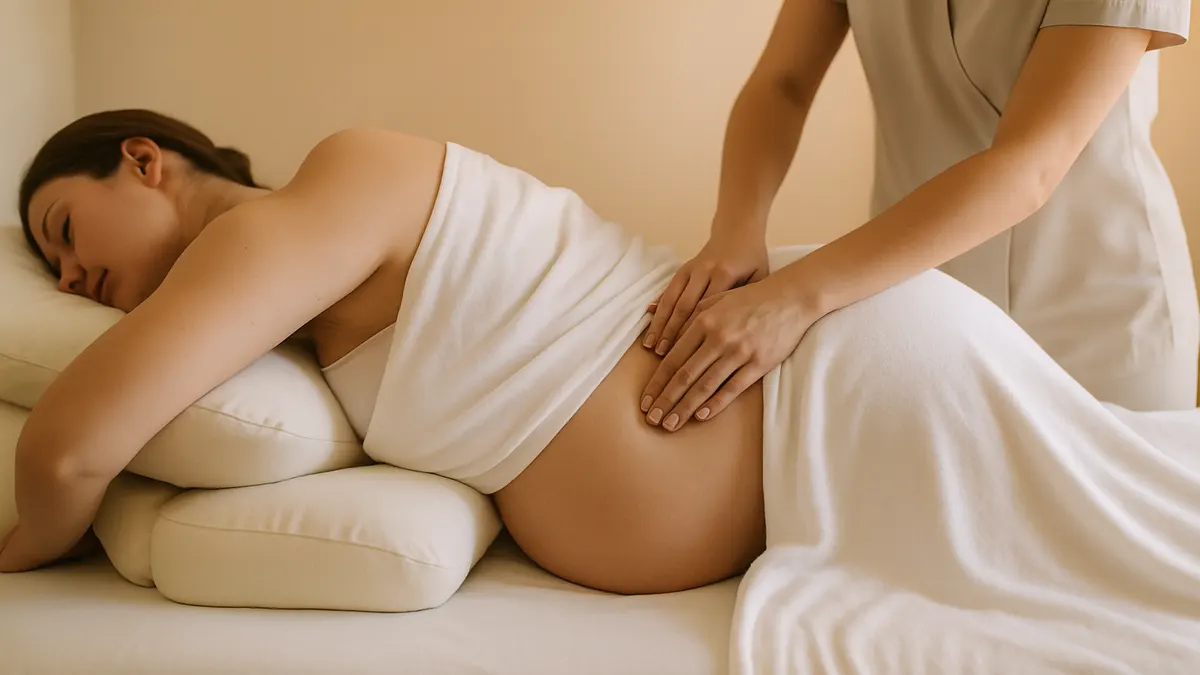
Positioning is one of the biggest differences between a prenatal massage and a standard session. Most therapists use a side-lying setup, propped with pillows or bolsters under the belly, back, and top leg to keep the spine neutral and the pressure off the abdomen. Some spas use specialty tables with a cutout for the belly that allow limited time face-down; either approach is designed to avoid pressure on the abdomen and reduce strain on the lower back.
Pressure is generally lighter than a deep tissue session, and certain points, particularly around the ankles, are approached with extra care since some practitioners avoid deep pressure there during pregnancy. Sessions typically run 45 to 60 minutes, a bit shorter than a standard full-body massage.
After the Massage
Give yourself a few extra minutes before standing up, since a warm, relaxed body combined with shifted balance can make you a little lightheaded. Drink water, move slowly, and don’t be surprised if you feel noticeably looser through the hips and lower back for the rest of the day.
What to Wear and Bring
Loose, comfortable clothing is the easiest choice for both the drive over and getting settled on the table. Most spas provide draping and will only undress the area currently being worked on, so you stay covered throughout. It’s also worth bringing:
- A list of any medications or supplements you’re currently taking
- Notes on specific areas of discomfort you want addressed
- A refillable water bottle for after your session
Choosing the Right Therapist
Not every massage therapist has specific prenatal training, so it’s worth asking directly about certification and experience with pregnant clients before you book. A therapist experienced in prenatal work will understand which techniques, like the general body massage approaches detailed on our body massage therapy in Warminster page, translate well to pregnancy and which ones need to be modified or skipped entirely.
Don’t hesitate to ask questions before your session. A good therapist will welcome them, and a brief conversation upfront usually makes the whole appointment more comfortable.
Pairing Your Visit With Other Pregnancy-Safe Treatments
Many expecting mothers like to turn their massage appointment into a fuller self-care day. A gentle facial treatment designed around pregnancy-safe ingredients pairs naturally with a massage, since both focus on relaxation rather than intense stimulation.
Waxing is also generally considered safe throughout pregnancy for most people, and many clients schedule a gentle hair removal session on the same day to feel fully refreshed before a big event or simply as part of routine upkeep.
If you’d like your partner involved in the experience, a couples spa appointment lets you both enjoy a relaxing afternoon together while you prepare for the months ahead.
Save These for After Baby Arrives
Heat-based treatments deserve a special note. Services like our sauna and spa experience involve prolonged heat exposure, which is generally discouraged during pregnancy because raising core body temperature for extended periods isn’t recommended for expecting mothers.
The same caution applies to our traditional bath house experience. Both are well worth revisiting once you’ve received clearance from your doctor postpartum, and many new moms treat that first sauna or banya visit back as its own small celebration.
Prenatal massage is just one entry point into the wider world of therapeutic bodywork. Our complete guide to body massage types and their benefits is a helpful read if you’re curious how techniques like Swedish, deep tissue, and prenatal massage differ once you’re exploring what fits your body best after pregnancy.
Ready for Your First Prenatal Massage?
A first prenatal massage doesn’t need to feel intimidating. Between the intake conversation, thoughtful positioning, and gentler pressure, most expecting mothers find the whole experience calmer and more restorative than they anticipated. If you’re ready to book, the team at Aura Esthetic & Spa is happy to walk you through what to expect based on your trimester and comfort level, so you can relax knowing every detail has been considered.