

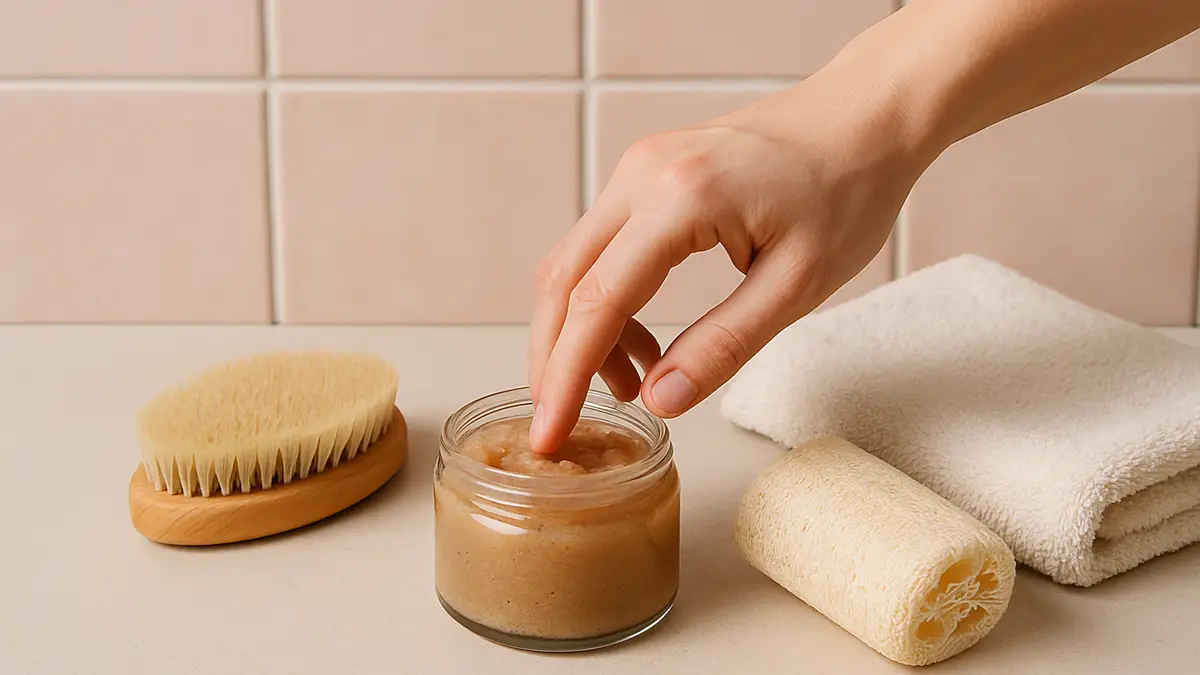
Body exfoliation removes dead, dull skin cells from the surface of the skin using physical scrubs, chemical acids, or natural enzymes, revealing smoother and more even-toned skin underneath. Regular exfoliation improves circulation, prevents clogged pores, and helps moisturizers and other skincare products absorb more effectively. Most people see the best results exfoliating the body one to three times per week, depending on skin sensitivity and the method used.
What Is Body Exfoliation?
Skin naturally sheds dead cells from its outermost layer, called the stratum corneum, roughly every twenty-eight to forty days. As people age, that renewal cycle slows down, which is why skin can start to look dull, rough, or flaky over time. Exfoliation speeds up this natural process by physically or chemically lifting away the buildup of dead cells, dirt, and oil that collects on the skin’s surface.
Unlike facial skin, which is thinner and more delicate, the skin on the body, especially on the arms, legs, back, and elbows, is thicker and can typically handle slightly more pressure and stronger exfoliating ingredients. That difference is part of why body and facial exfoliation products are rarely interchangeable, even when they use similar active ingredients.
Why Body Exfoliation Matters
A consistent exfoliation routine does more than smooth rough patches here and there. Some of the most noticeable benefits include:
- Softer, smoother skin texture, often visible after a single session
- A brighter, more even skin tone across the arms, legs, and back
- Fewer ingrown hairs, especially after shaving or waxing
- Better absorption of lotions, oils, and serums applied afterward
- Improved circulation to the treated area
- A reduced appearance of the rough, bumpy patches associated with keratosis pilaris
- A helpful first step for prepping skin before self-tanning, since it removes the flaky patches that cause uneven color
Types of Body Exfoliation Treatments
There are three main categories of exfoliation, and each works in a slightly different way.
Physical, or Mechanical, Exfoliation
Physical exfoliation uses friction to manually lift away dead skin cells. This category includes body scrubs made with sugar or salt, dry brushing, loofahs, and textured exfoliating gloves. It is one of the most accessible methods and tends to produce immediate, visible results, though it should always be done with gentle pressure to avoid irritating or micro-tearing the skin. Coarser scrubs work well on tougher areas like elbows and knees, while finer grains are gentler for thinner-skinned areas.
Chemical Exfoliation
Chemical exfoliants rely on acids to dissolve the bonds holding dead skin cells together, allowing them to slough off without scrubbing. Alpha-hydroxy acids, such as glycolic and lactic acid, work well on dry or sun-damaged skin because they also help with hydration. Beta-hydroxy acids, like salicylic acid, are oil-soluble and penetrate clogged pores more effectively, which makes them a popular choice for treating body acne on the back and chest.
Enzyme Exfoliation
Enzyme exfoliants, often derived from papaya, pumpkin, or pineapple, break down dead skin cells more gently than acids do. This makes them a strong option for people with sensitive or reactive skin who still want the brightening benefits of chemical exfoliation without a higher risk of irritation.
Professional Spa Body Exfoliation
At-home scrubs are useful for weekly maintenance, but a full body treatment session at a spa goes further by pairing exfoliation with steam, targeted heat, and massage techniques that loosen dead skin more thoroughly than a shower scrub alone. These sessions are also designed by trained estheticians who can adjust pressure, ingredients, and technique based on individual skin type and sensitivity, which is difficult to replicate consistently at home.
Physical vs. Chemical Exfoliation at a Glance
| Factor | Physical Exfoliation | Chemical Exfoliation |
| Best suited for | Normal to oily skin | Dry, sensitive, or sun-damaged skin |
| How it works | Manual friction lifts cells away | Acids dissolve the bonds between cells |
| Common tools | Scrubs, brushes, loofahs, gloves | AHAs, BHAs, enzyme-based masks |
| Typical frequency | 2-3 times per week | 1-2 times per week |
| What it feels like | Immediate smoothness | Gradual brightening over several days |
How Often Should You Exfoliate Your Body?
Frequency really comes down to skin type. People with oily or naturally thicker skin can often exfoliate up to three times a week without issue, while those with dry or sensitive skin generally do better limiting sessions to once or twice weekly to avoid stripping the skin’s natural oils. Over-exfoliating is one of the most common mistakes people make, and it can damage the skin barrier, leading to redness, tightness, or new breakouts. It is worth easing into any new routine gradually and paying attention to how the skin responds over the first few weeks.
What to Expect During a Professional Body Exfoliation Treatment
Most professional sessions follow a fairly similar sequence from start to finish:
- Consultation: A skincare professional reviews skin type, sensitivities, and personal goals before choosing a method.
- Cleansing: The skin is cleansed first to remove surface oil, sweat, and any leftover product.
- Exfoliation: A scrub, chemical solution, or enzyme treatment is applied and worked into the skin in sections.
- Steam or rinse: Warm water or steam is used to help lift away the loosened dead skin cells.
- Massage and moisturize: Many sessions close with a therapeutic massage add-on and a rich moisturizer to lock in hydration and extend the results.
Pairing exfoliation with massage is not just about relaxation. The added warmth and pressure can further improve circulation, which tends to make smoother, brighter results last longer between visits.
Body Exfoliation vs. Facial Exfoliation: Key Differences
While the underlying goal is similar, body and facial exfoliation are not interchangeable. Facial skin is thinner, more reactive, and far more visible day to day, so it usually calls for gentler formulas and lower acid concentrations. Skin on the body can typically tolerate coarser scrubs and somewhat stronger treatments without the same risk of irritation. Anyone building out a broader skincare routine might also consider a dedicated facial treatment, which uses techniques and ingredient concentrations specifically suited to facial skin’s needs rather than simply scaling down a body formula.
Preparing for and Caring for Skin After Exfoliation
A little preparation goes a long way toward getting comfortable, effective results.
Before a treatment:
- Avoid shaving or waxing for at least twenty-four hours beforehand
- Skip exfoliation entirely on sunburned, windburned, or broken skin
- Drink water throughout the day so skin is well hydrated going in
After a treatment:
- Apply a fragrance-free moisturizer within a few minutes of finishing
- Avoid direct sun exposure on treated areas for at least twenty-four hours
- Wear loose clothing so freshly exfoliated skin is not irritated by rubbing or friction
- Continue drinking water to support the skin’s natural recovery process
For those who want to maintain results at home between spa visits, a simple homemade sugar scrub is an easy, low-cost way to keep skin smooth using ingredients already in most kitchens.
A warm sauna session beforehand can also improve results considerably. The heat helps open pores and soften the outer layer of skin, which makes the exfoliation that follows both more effective and more comfortable.
Who Should Use Caution With Body Exfoliation
Exfoliation is not the right choice for every person at every moment. It is generally best to avoid or modify treatments if any of the following apply:
- Active sunburn or windburn
- Open cuts, wounds, or active acne breakouts in the treatment area
- Eczema, psoriasis, or rosacea flare-ups
- Recently waxed or shaved skin, which typically needs twenty-four to forty-eight hours to recover first
- Very sensitive or reactive skin, where a small patch test is worth doing before a full treatment
People who are pregnant or managing a chronic skin condition should check with a healthcare provider before trying a new exfoliation method, particularly one involving stronger acids or unfamiliar ingredients. A knowledgeable esthetician can also help tailor a treatment plan, including options like coffee scrubs for reducing the appearance of cellulite-prone areas, to fit individual skin goals safely.
Smoother Skin Starts With the Right Exfoliation Routine
Whether it is a gentle at-home scrub or a full professional session, consistent body exfoliation remains one of the simplest ways to keep skin smooth, bright, and healthy throughout the year. For anyone ready to feel the difference a guided, professional approach can make, Aura Esthetic & Spa offers a range of body treatments built around individual skin needs, from a first visit through ongoing seasonal maintenance.