The right facial treatment depends entirely on your skin type. Hydrating facials work best for dry skin, deep-cleansing facials suit oily and acne-prone skin, gentle enzyme facials calm sensitive skin, and anti-aging facials target fine lines and lost elasticity in mature skin. Choosing the wrong treatment for your skin type is often the reason a facial feels pleasant in the moment but does little for your complexion over the following weeks.
What Is a Facial Treatment and Why Does It Matter?
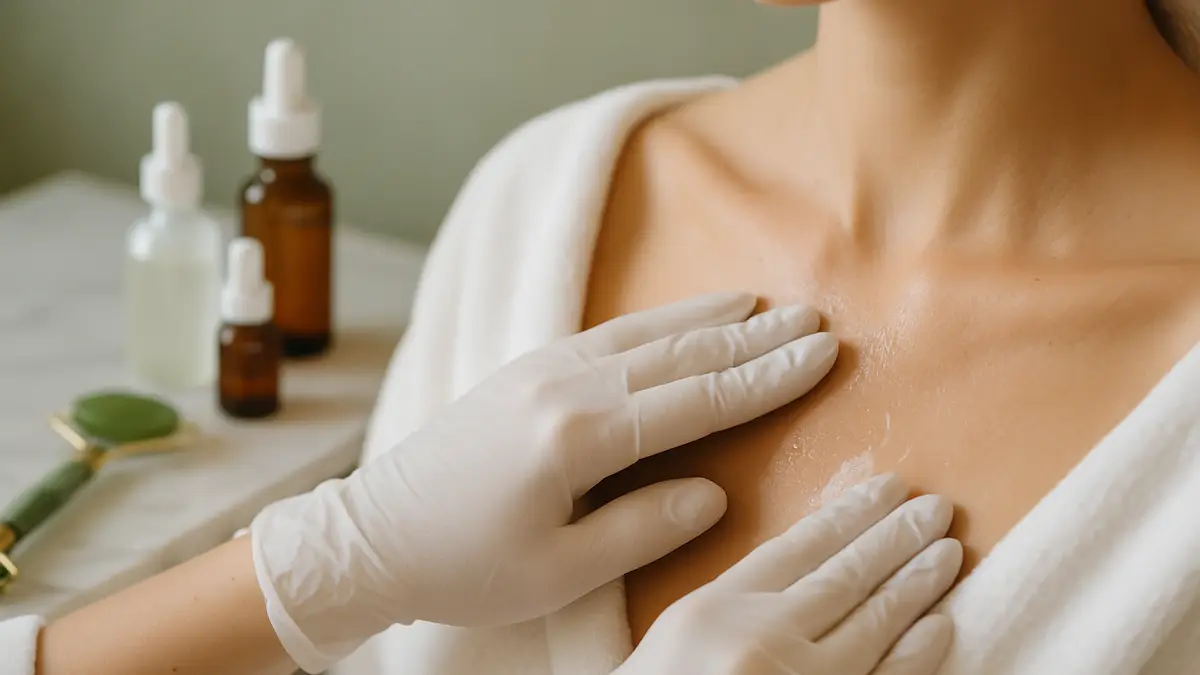
A facial treatment is a multi-step skincare service performed by a licensed esthetician, typically combining cleansing, exfoliation, extractions where needed, a targeted mask, and a moisturizing finish suited to your skin’s current condition. Unlike a five-minute at-home routine, a professional facial relies on cosmeceutical-grade products and tools that work more effectively than most retail skincare.
Booking professional facial treatments with a trained esthetician means your skin is assessed in person before any product touches your face, so the exfoliant, mask, and serums chosen for the session actually match what your skin needs that day instead of following a generic, one-size-fits-all protocol. That individual assessment is the single biggest factor separating a facial that genuinely improves your skin from one that simply feels relaxing.
Skin also changes with the seasons, stress levels, hormones, and age, which is why the right facial for you this spring may not be the right one by winter. A trained esthetician tracks those shifts across repeat visits and adjusts the treatment plan accordingly, rather than repeating the same protocol regardless of how your skin has changed since your last appointment.
How to Identify Your Skin Type Before You Book
Most people fall into one of six broad categories, and knowing yours makes it far easier to choose (or ask your esthetician for) the right treatment.
- Oily skin: noticeable shine by midday, enlarged pores, and frequent breakouts around the forehead, nose, and chin.
- Dry skin: tightness after cleansing, visible flaking, a dull texture, and fine lines that feel more pronounced.
- Combination skin: an oily T-zone paired with drier cheeks, often requiring two different approaches on the same face.
- Sensitive skin: redness, stinging, or reactivity whenever a new product or ingredient is introduced.
- Normal skin: balanced oil production, minimal breakouts, and an even tone with few visible concerns.
- Mature skin: reduced elasticity, deeper static lines, slower cell turnover, and a tendency toward dryness that wasn’t there a decade ago.
Best Facial Treatments for Dry Skin
Dry skin responds best to hydrating facials built around hyaluronic acid, ceramides, and nourishing oils that rebuild a weakened moisture barrier. Exfoliation should be gentle, since dry skin already has a compromised barrier and harsh scrubs or high-percentage acids can leave it more irritated than before. Look for treatments that include a hydrating mask left on for an extended period, followed by a rich, barrier-repairing moisturizer and a facial massage to boost circulation.
Best Facial Treatments for Oily and Acne-Prone Skin
Deep-cleansing facials are the standard recommendation for oily and acne-prone skin, usually incorporating salicylic acid, clay-based masks, and careful manual extractions to clear congested pores. Some estheticians also add LED light therapy to calm active breakouts and reduce inflammation without stripping the skin. Non-comedogenic products matter here more than in any other category, since even a small amount of pore-clogging oil can trigger a new breakout within days.
Best Facial Treatments for Combination Skin
Combination skin rarely responds well to a single, uniform treatment across the whole face. Multi-masking, where a clay or salicylic mask is applied to the oilier T-zone while a hydrating mask covers the drier cheeks, addresses both concerns in one session. A skilled esthetician will adjust pressure, product selection, and extraction focus by zone rather than treating the entire face identically.
This is also the skin type most likely to see disappointing results from at-home, one-product routines, since a moisturizer rich enough to help dry cheeks can easily worsen oiliness and congestion along the nose and forehead. Professional multi-masking solves that mismatch in a single visit.
Best Facial Treatments for Sensitive Skin
Sensitive skin needs calming, low-irritant treatments such as enzyme facials, which use fruit-derived enzymes instead of physical scrubs or strong acids to gently dissolve dead skin cells. Ingredients like oatmeal, chamomile, and centella asiatica help reduce redness rather than provoke it. Fragrance-free products and a patch test before any new treatment are especially important, since reactions on sensitive skin can take a day or two to fully appear.
Consistent, correctly matched treatments also play a role in how facial treatments improve overall skin health and glow over time, since sensitive skin in particular benefits from a steady, predictable routine rather than frequent product changes.
Best Facial Treatments for Mature and Aging Skin
Mature skin benefits most from anti-aging facials that combine peptides, antioxidants, and techniques like microcurrent or facial massage to support collagen production and improve firmness. These treatments tend to focus on gradual improvement over a series of sessions rather than a single dramatic result.
Local estheticians offering facial treatments in Montgomery County can evaluate sun damage, collagen loss, and skin laxity in person, which is difficult to judge accurately from a mirror at home.
What Happens During a Professional Facial: Step-by-Step
Every professional facial generally follows the same core sequence, though the products and techniques change based on skin type.
- Consultation and skin analysis: your esthetician examines your skin under proper lighting and asks about concerns, allergies, and current products.
- Double cleanse: an oil-based cleanser removes makeup and sunscreen, followed by a water-based cleanser to clear remaining impurities.
- Exfoliation: dead skin cells are removed using an enzyme, mild acid, or gentle physical exfoliant appropriate to your skin type.
- Extractions: if needed, clogged pores are carefully cleared using sterile tools to reduce the risk of scarring or irritation.
- Mask and treatment serums: a targeted mask addresses your primary concern, whether that’s hydration, oil control, calming, or firmness.
- Massage, moisturizer, and SPF: a facial massage boosts circulation before the session finishes with a moisturizer suited to your skin and daytime sun protection.
Before you leave, your esthetician should walk you through a short at-home aftercare plan, covering which products to avoid for the next day or two and when it’s safe to resume retinoids or exfoliating acids.
Facial Treatment Comparison by Skin Type
| Skin Type | Recommended Facial | Key Benefit |
| Dry | Hydrating facial | Restores the moisture barrier and softens fine lines |
| Oily & Acne-Prone | Deep-cleansing facial | Clears congested pores and reduces breakouts |
| Combination | Multi-masking facial | Balances two different skin needs in one session |
| Sensitive | Calming enzyme facial | Reduces redness and irritation without harsh exfoliation |
| Mature | Anti-aging facial | Firms skin and supports collagen production |
How Often Should You Get a Facial?
Most skincare professionals recommend a facial every four to six weeks, which roughly matches the skin’s natural cell turnover cycle. Acne-prone skin sometimes benefits from more frequent visits during an active breakout period, while dry or mature skin can often stretch to six or eight weeks between sessions if a consistent home routine is maintained in between.
Many guests choose to combine their facial with a relaxing body massage in Montgomery County to release tension in the neck and shoulders while their skin absorbs treatment serums, turning a single appointment into a more complete reset.
If stress relief is just as important to you as skin results, exploring facials chosen for relaxation and a lasting glow can help you unwind while still giving your skin genuine, visible benefits.
Whatever your skin type, the licensed estheticians at Aura Esthetic & Spa can help you build a facial routine that delivers visible, lasting results rather than a one-time treat.