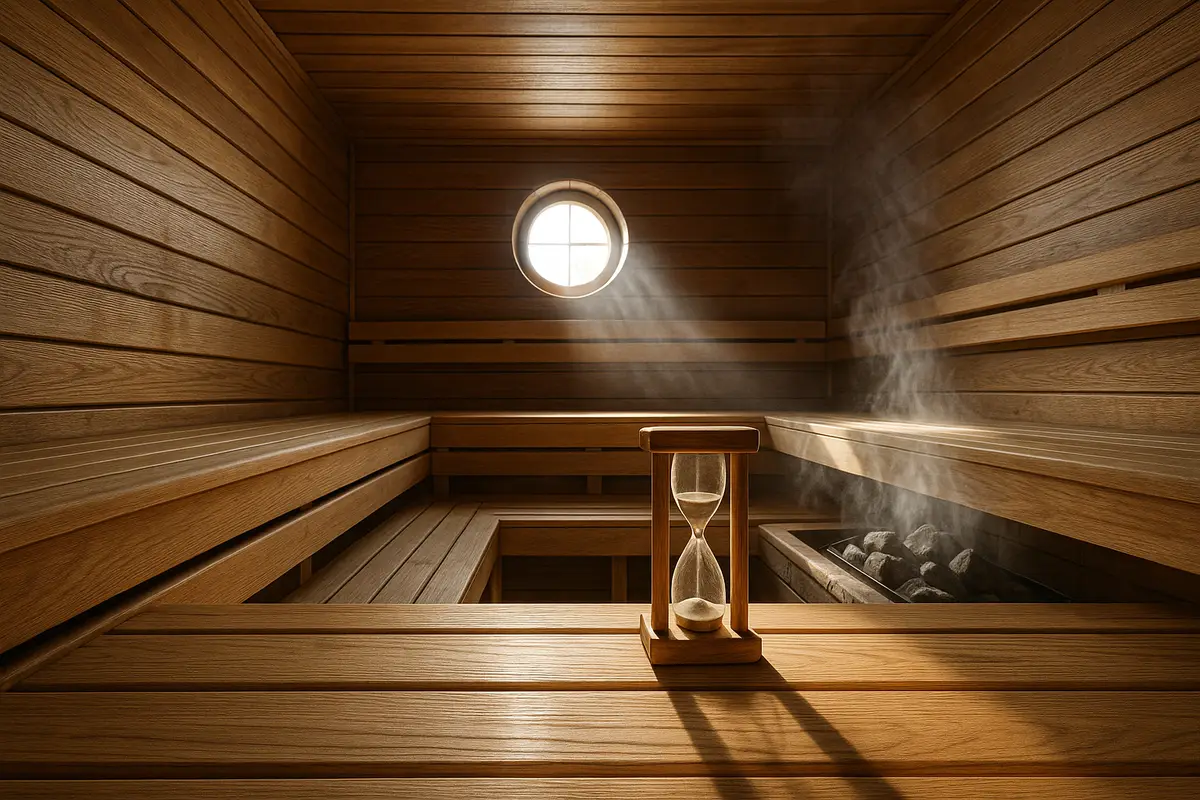
Most healthy adults should stay in a sauna for 15 to 20 minutes per session. If you are new to heat bathing, start with 5 to 10 minutes and build up gradually over several visits. No single sitting in a traditional sauna should exceed 30 minutes, and you should always step out immediately if you feel dizzy, nauseous, or lightheaded.
That is the short version. The right duration for you depends on your experience level, the type of sauna, and how well hydrated you are. This guide breaks down safe time ranges for every situation and shows you how to structure a session so you leave feeling restored instead of drained.
Recommended Sauna Times at a Glance
| Who You Are |
Time per Sitting |
Rounds per Visit |
| First-time or occasional user |
5–10 minutes |
1–2 rounds |
| Regular user (weekly habit) |
15–20 minutes |
2–3 rounds |
| Experienced heat bather |
Up to 20 minutes |
3–4 rounds with cooldowns |
| Anyone, any level (hard limit) |
30 minutes maximum |
Stop at the first sign of discomfort |
These figures assume a traditional dry sauna heated to roughly 150–195°F (65–90°C). Infrared cabins run cooler, so sessions can safely run longer — more on that below.
Why Sauna Duration Matters
A sauna is a controlled stressor. Temperatures near 180°F raise your core body temperature by two to three degrees, push your heart rate to 100–150 beats per minute, and trigger heavy sweating — about a pint of fluid in a single session. In the right dose, that stress produces the rewards: improved circulation, looser muscles, and a calmer nervous system.
Stay too briefly and those adaptations never kick in. Stay too long and the benefits reverse — dehydration, dizziness, and heat exhaustion take over. Decades of Finnish research consistently point to roughly 15 to 20 minutes as the sweet spot where benefits are strongest without meaningful risk for healthy adults. Regular heat exposure in that range is also linked to visible improvements in complexion, which is why many guests specifically seek out sauna benefits for skin glow, detox, and anti-aging as part of a consistent wellness routine.
Sauna Time by Experience Level
Beginners: 5–10 Minutes
If you have never used a sauna, your body has not yet learned to handle sustained heat efficiently. Start with five minutes on the lowest bench, where temperatures are coolest. Step out, cool down, and see how you feel; a second short round is fine if you are comfortable. Add two to three minutes per visit — most people acclimate within three to four weeks of consistent use.
Regular Users: 15–20 Minutes
Once heat feels familiar, 15 to 20 minutes per sitting is the range most research supports. At this duration your heart rate rises into a zone comparable to a brisk walk, blood vessels dilate fully, and sweating peaks. Two or three rounds with cool-down breaks in between beat one long, unbroken sitting.
Experienced Heat Bathers: Multiple Rounds, Never Marathon Sittings
Seasoned users follow the classic European rhythm: three to four rounds of 10 to 20 minutes each, separated by cold rinses and rest. Even veterans rarely extend a single sitting past 20 minutes — they add rounds, not minutes. This cycle of heating and cooling is the heart of an authentic Russian bath house experience, where steam rounds, cold plunges, and rest are deliberately alternated for the strongest effect.
How Long by Sauna Type
Not all saunas deliver heat the same way, and the type you choose changes how long you can safely stay. Facilities offering a complete spa and sauna experience often house more than one style under the same roof, so it pays to know the timing rules for each.
| Sauna Type |
Typical Temperature |
Recommended Time |
| Traditional dry (Finnish) sauna |
150–195°F (65–90°C) |
10–20 minutes |
| Steam room / Russian banya parilka |
110–120°F, near 100% humidity |
10–15 minutes |
| Infrared sauna |
120–140°F (49–60°C) |
20–30 minutes |
Steam rooms feel hotter than their thermometer reading because humidity prevents sweat from evaporating, so err on the shorter side. Infrared cabins heat your body directly rather than heating the air, which is why sessions can run longer. For a deeper look at the differences, a full comparison of the infrared sauna vs. traditional sauna experience is worth exploring before you settle on a favorite.
How to Structure a Safe Sauna Session, Step by Step
A good session has a rhythm. Follow this sequence and the timing largely takes care of itself:
- Hydrate first. Drink 8–16 ounces of water in the 15–30 minutes before you enter. Never sauna after alcohol.
- Rinse and dry off. A quick warm shower preps your skin; dry skin sweats more readily than wet skin.
- First round: 10–15 minutes. Sit on a towel, start on a lower bench, and breathe slowly. Set a timer rather than guessing.
- Cool down: 10+ minutes. Step out, take a cool shower or simply rest at room temperature, and sip water until your heart rate settles.
- Optional second and third rounds. Repeat the heat-and-cool cycle, keeping each round at or under 20 minutes.
- Final cooldown and rehydration. End with the longest rest of the visit. Replace fluids with water or an electrolyte drink — you have likely sweated out a pint or more.
Many guests schedule their heat rounds before bodywork, since warm, pliable muscles respond noticeably better to a professional body massage than cold ones do. Ending your visit on the massage table also builds in the extended cooldown your body wants anyway.
Signs You Have Stayed Long Enough
Your body signals its limits before real trouble starts. Leave the sauna immediately — regardless of the clock — if you notice any of the following:
- Dizziness or lightheadedness when you move your head or stand
- Nausea or a sudden headache
- A racing or irregular heartbeat that feels out of proportion to the heat
- You have stopped sweating despite the temperature — an early sign of dehydration
- Tingling skin, confusion, or a general sense that something is off
Heavy sweating itself is normal and, for many people, the point — it is how heat bathing supports the body’s natural cleansing processes, and the mechanics of sweating out toxins during a sauna detox explain why hydration matters so much. What is not normal is sweating so long that your body runs out of fluid to work with.
How Often Should You Sauna?
Frequency matters as much as duration. Large Finnish population studies found that people who used a sauna four to seven times per week saw the strongest associations with cardiovascular health, while even two to three weekly sessions showed measurable benefit. For most Americans, a practical rhythm looks like this:
- General relaxation and stress relief: 1–2 sessions per week
- Muscle recovery and athletic support: 2–4 sessions per week
- Maximum cardiovascular and longevity benefit: 4+ sessions per week, if your schedule and health allow
Timing around exercise raises its own questions — whether to schedule your sauna before or after a workout changes what you get out of both, and it is a topic worth its own deep dive.
Tips to Get More Out of Every Minute
Once your timing is dialed in, small habits amplify the results. Even a 30-second cool shower between rounds sharpens circulation, and the growing popularity of cold plunge therapy after sauna reflects how well the two pair together.
Treat the sauna as the opening act of a longer self-care visit rather than the whole show. Heat opens pores and boosts blood flow to the face, which is why following your final round with a deeply hydrating facial treatment tends to produce better absorption and a longer-lasting glow than either service alone.
Skin care timing works in the other direction, too. Freshly treated skin can be sensitive to high heat, so if you are planning gentle hair removal, book it for after your sauna rounds or on a separate day, and give your skin a few hours before returning to the heat.
Finally, do not underestimate the value of company. Sharing the heat-cool-rest cycle with a partner keeps sessions honest on timing and turns a health habit into quality time — one reason a relaxing couples spa session has become one of the most requested ways to experience the sauna.
Who Should Be Cautious With Sauna Time
Certain groups should shorten sessions or check with a doctor first: people with heart conditions, uncontrolled blood pressure, or recent cardiac events; anyone who is pregnant; people taking medications that affect sweating or blood pressure; and anyone who has consumed alcohol. Children and older adults regulate heat less efficiently and should keep sessions brief and supervised. When in doubt, a five-minute session and a conversation with your physician beat guessing.
Sauna Session Guidelines for Safe and Effective Results
Fifteen to twenty minutes per sitting, a hard ceiling of thirty, shorter rounds while you are learning, and water before and after — that is the whole formula. Respect those numbers and the sauna rewards you with better circulation, looser muscles, and calmer sleep. When you are ready to put the guidance into practice, the team at Aura Esthetic & Spa in Southampton, PA welcomes everyone from first-timers to lifelong banya devotees, with saunas, steam rooms, and cold plunges built for exactly the kind of session this guide describes.