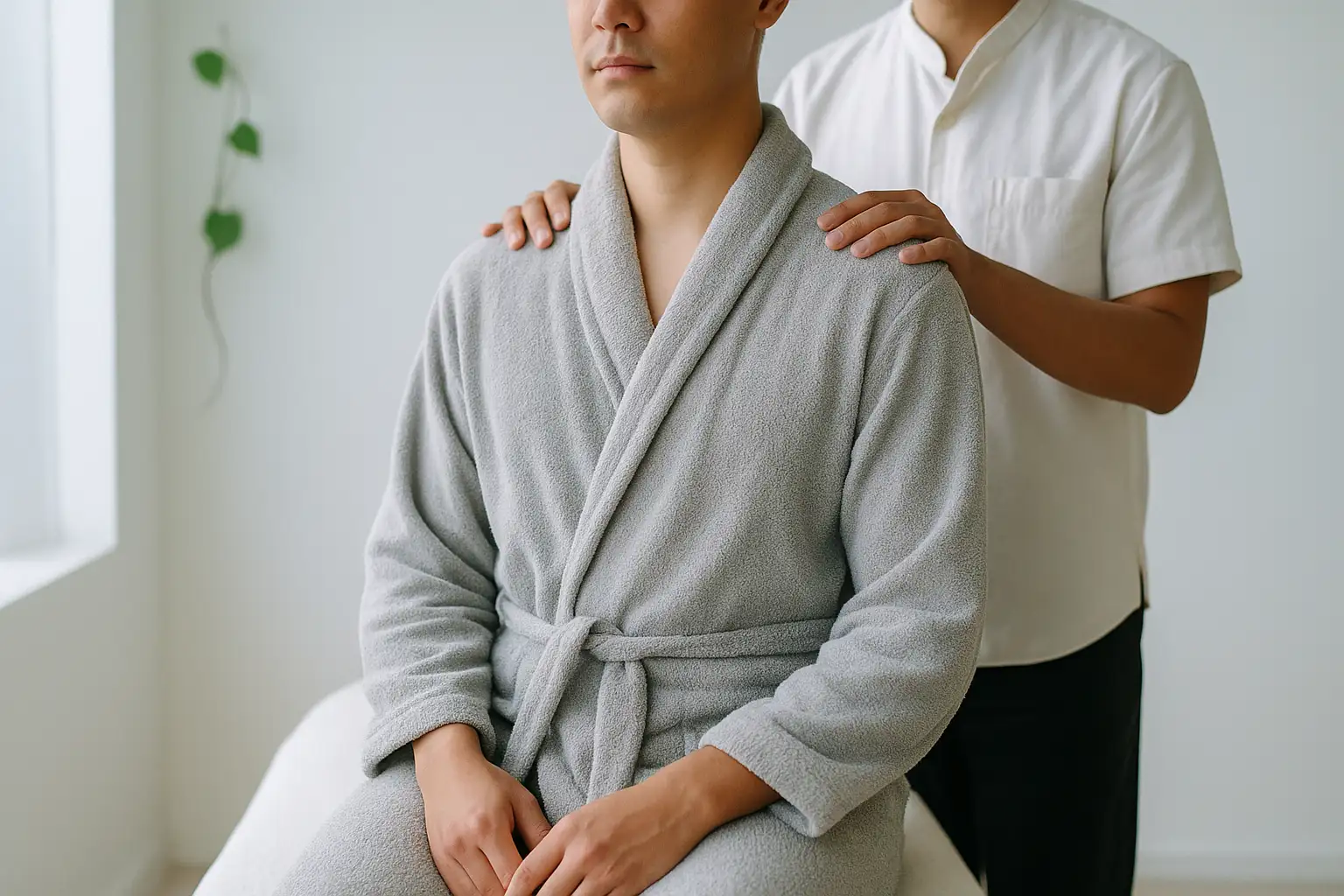
Regular massage therapy supports mental health in five key ways: it lowers stress and calms an overactive mind, eases symptoms of anxiety and depression, improves sleep quality, builds body awareness and mindfulness, and creates space for meaningful self-care and connection.
At a Glance: 5 Mental Health Benefits of Massage Therapy
- Lowers stress — activates the parasympathetic nervous system and reduces cortisol
- Eases anxiety and depression symptoms — boosts serotonin and dopamine through safe, grounding touch
- Improves sleep quality — calms the nervous system and supports melatonin production
- Builds mindfulness and body awareness — trains you to notice and release tension before it builds
- Creates space for self-care and connection — protected, screen-free time that supports emotional well-being
When most people picture a massage, they imagine sore muscles loosening up after a tough week. That is part of the story, but it is far from the whole picture. A growing body of research shows that consistent, hands-on bodywork does just as much for the mind as it does for the body. The hour you spend on the table can quiet anxious thoughts, lift a low mood, and restore a profound sense of inner calm.
In a world of constant notifications, long commutes, and never-ending to-do lists, your nervous system rarely gets the chance to fully power down. Regular massage therapy gives it that chance. Below, we break down the five biggest mental health benefits of making bodywork a regular habit, and how to fold it into a routine that actually sticks.
1. It Lowers Stress and Calms an Overactive Mind
Chronic stress keeps your body locked in fight-or-flight mode, flooding your system with cortisol and adrenaline. Over time, you become quicker to recognize where physical tension accumulates and faster to consciously release it. Massage flips the switch.
Skilled touch activates the parasympathetic nervous system, the branch responsible for rest and recovery. As your muscles release, your heart rate slows, your breathing deepens, and your mind begins to settle. Many people find that a single session of therapeutic bodywork leaves them feeling clearer and lighter for days afterward.
Research has repeatedly linked regular massage to measurable drops in cortisol levels, alongside increases in feel-good chemistry. That biological shift is exactly why a calm spa session feels so different from simply collapsing on the couch.
2. It Eases Symptoms of Anxiety and Depression
Anxiety and low mood often live in the body as much as the mind. Tight shoulders, a clenched jaw, and shallow breathing all feed the cycle. By physically interrupting that tension, massage helps break the loop.
Studies on massage therapy have found that consistent sessions can reduce the everyday symptoms many people associate with anxiety and mild depression. The effect comes from a combination of factors:
- A boost in serotonin and dopamine, the body’s natural mood stabilizers
- A reduction in cortisol, the primary stress hormone
- The grounding, reassuring power of safe human touch
- Dedicated, screen-free time focused entirely on your own well-being
None of this replaces professional mental health care, and it should not be treated as a substitute for therapy or medication when those are needed. Think of regular massage instead as a supportive companion to the other tools in your wellness toolkit.
3. It Improves Sleep Quality
Poor sleep and poor mental health travel together. When you are wired and restless at night, everything feels harder the next day. Massage helps on both fronts at once.
By calming the nervous system and easing physical tension, bodywork makes it easier to fall asleep and stay asleep. It also encourages the production of serotonin, which your body converts into melatonin, the hormone that regulates your sleep cycle. Guests who book sessions regularly often report that their deepest, most restorative sleep happens on massage nights.
For an even deeper reset, pairing your treatment with a heat-and-steam wellness ritual can amplify the calming effect, leaving both body and mind primed for rest.
4. It Builds Body Awareness and Mindfulness
So much of modern stress comes from living entirely in our heads, replaying the past or worrying about the future. Massage gently pulls your attention back to the present moment.
As a therapist works through areas of tension, you naturally begin to notice where you hold stress, how your breath moves, and what relaxation actually feels like in your body. This quiet, focused awareness is a form of mindfulness, and it is a skill that carries over into daily life. Over time, you become quicker to recognize when your shoulders are creeping toward your ears, and faster to let them drop.
That heightened body awareness can be a powerful early warning system, helping you catch and release stress before it builds into something heavier.
5. It Creates Space for Connection and Self-Care
Making time for massage is, at its core, an act of self-respect. In a culture that glorifies being busy, choosing to slow down sends a quiet but important message to yourself: your well-being matters.
That sense of care deepens when the experience is shared. Booking a side-by-side relaxation experience with a partner or close friend turns a simple appointment into meaningful time together, free from phones and distractions. Shared calm has its own emotional rewards, strengthening bonds while lowering stress for everyone involved.
Whether you go solo or bring someone along, the ritual of regular self-care reinforces healthy habits and gives you something restorative to look forward to.
How to Make Massage Part of Your Mental Health Routine
The benefits above grow stronger with consistency. A single massage feels wonderful, but the real shifts in mood, sleep, and stress show up when bodywork becomes a regular habit. A few simple guidelines can help:
- Aim for consistency. Monthly sessions are a solid starting point; biweekly can help during especially stressful stretches.
- Match the style to your needs. Gentle techniques calm the nervous system, while deeper work releases stubborn tension.
- Protect the time. Treat your appointment like any other important commitment, not the first thing to cancel when life gets busy.
- Stack healthy habits. Pair massage with steam, quiet rest, and hydration to extend the calming effect.
Ready to Care for Your Mind and Body?
Aura Esthetic Spa & Sauna is based at 98 Buck Rd in Southampton, PA, and welcomes guests from throughout Bucks and Montgomery County for regular massage therapy sessions. We see clients booking body massage from Warminster, Newtown, Holland, Feasterville, and Richboro, each just a short drive from our spa.
Every session is tailored to what your nervous system actually needs that day, whether that means a gentle, calming touch to ease stress or deeper bodywork to release stubborn tension. If you’re building massage into a regular mental health routine, our team can help you find a rhythm and technique that fits your goals.
To learn more or schedule a session, call 215-322-3033 or reach out to our team. Sharing the experience with someone else? A gift certificate makes it easy to pass the calm along.