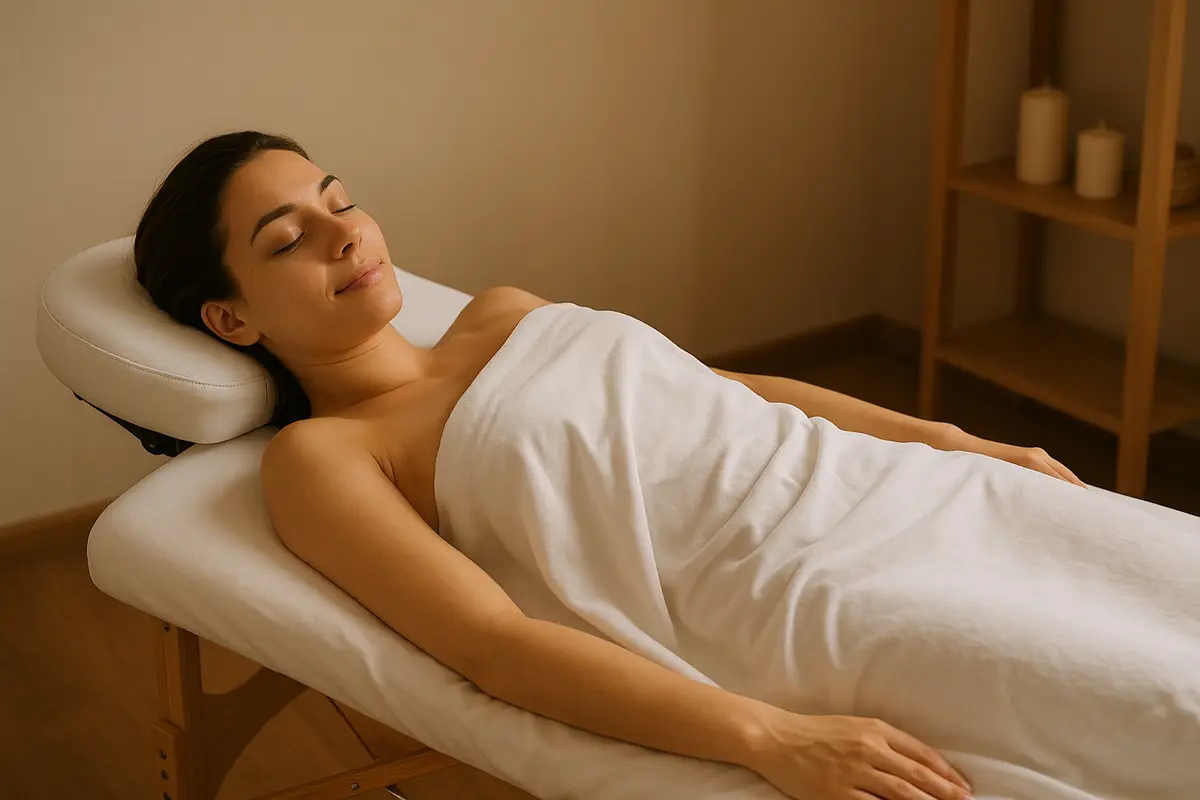
After a massage, your body moves through a series of changes over the next 24 hours — blood flow and feel-good hormones rise immediately, your lymphatic system flushes out waste over the following hours, your nervous system resets, and you typically get your deepest, most restorative sleep that night.
At a Glance: What Happens After a Massage
- 0–30 minutes — blood flow increases, cortisol drops, serotonin and dopamine rise
- 1–3 hours — your lymphatic system clears metabolic waste and excess fluid
- 3–6 hours — your nervous system recalibrates, lowering pain and anxiety
- 6–12 hours — skin and tissue enter a regeneration phase
- 12–24 hours — deep sleep kicks in, repairing muscle and boosting growth hormone
- Beyond 24 hours — regular sessions compound these benefits over time
You step off the table, pull on your robe, and feel like you are floating. But what is actually happening inside your body right now? The calming sensation you feel after a professional massage session is not just a pleasant mood — it is a cascade of real, measurable changes that unfold over the next 24 hours. Here is a detailed, hour-by-hour look at what your body goes through after skilled hands get to work.
The First 30 Minutes: Immediate Physiological Response
As soon as the session ends, your body is already in the middle of a significant transition. Several things happen almost simultaneously:
- Blood flow surges. Massage dilates blood vessels and stimulates circulation. In the first half hour, oxygenated blood floods muscles that were previously tight and underserved.
- Cortisol drops. Studies consistently show that massage lowers cortisol — your primary stress hormone — sometimes by as much as 30%. You may feel a quiet, almost meditative calm settle in.
- Serotonin and dopamine rise. These feel-good neurotransmitters surge, which is why you often feel inexplicably happy or at peace right after a session.
- Muscle tension releases. Myofascial trigger points begin to relax, and the connective tissue surrounding muscles grows more pliable as it warms and loosens.
This is also the phase where some people feel briefly lightheaded. That is perfectly normal — it is simply your nervous system shifting from fight-or-flight into a deep parasympathetic (rest-and-digest) state. Drink a glass of water before you even think about checking your phone.
Hours 1–3: The Lymphatic Flush Begins
By the time you reach the car or settle into your post-session lounge, your lymphatic system is working overtime. Unlike your cardiovascular system, the lymphatic network has no pump — it depends on movement and manual stimulation to drain metabolic waste. Massage provides exactly that.
What Is Being Cleared?
- Lactic acid and other metabolic byproducts from muscle tissue
- Inflammatory cytokines that contribute to soreness and stiffness
- Excess interstitial fluid that causes puffiness and water retention
During this window you might notice slight puffiness or feel a mild flush in treated areas — that is a sign fluid is moving. Staying hydrated is essential to help your kidneys process and eliminate what your lymphatic system has released.
If you booked a session as part of a shared wellness ritual, both partners will be going through this detox phase together — which is actually a beautiful and often surprisingly bonding experience.
Hours 3–6: Nervous System Recalibration
Between three and six hours post-massage, the nervous system continues its transition. Most people report a sustained sense of calm, reduced anxiety, and an unusual ability to focus. Here is why:
- Vagal tone improves. Massage activates the vagus nerve, which governs heart rate, digestion, and emotional regulation. Higher vagal tone is associated with resilience, emotional stability, and better stress recovery.
- Pain perception changes. Gate control theory suggests that the tactile stimulation from massage can partially block pain signals traveling to the brain — an effect that can persist for several hours.
- Endorphin release continues. Your body’s natural painkillers keep circulating, providing a lingering sense of physical ease.
If your session included steam or heat therapy — something our traditional banya ritual pairs beautifully with therapeutic massage — your core temperature will have also risen and is now gradually normalizing, which itself promotes muscle relaxation and deeper sleep.
Hours 6–12: Skin and Tissue Regeneration
If your massage included any bodywork on the skin — exfoliation, oils, or a wrap — you will enter a skin-renewal phase as you move into the second half of your day. But even a standard therapeutic massage has dermal effects:
- Increased blood flow brings more oxygen and nutrients to skin cells
- Collagen synthesis can be mildly stimulated by manipulating the dermis and subcutaneous tissue
- The sebaceous glands are activated, improving skin elasticity and natural moisture levels
This is also the ideal window to book or consider a skin-renewing facial treatment the same day or the day following a massage. With circulation elevated and the nervous system relaxed, the skin is particularly receptive to cleansing and nourishing treatments.
For guests interested in full-body smoothness, this elevated circulatory state also makes it a smart time to schedule hair removal services — the skin is warm, pores are open, and the process tends to be noticeably more comfortable.
Hours 12–24: The Sleep Dividend
Most people report their best sleep in months the night after a massage. This is not coincidental. The combination of reduced cortisol, elevated serotonin (which converts to melatonin at night), and normalized muscle tension creates the ideal physiological conditions for restorative sleep.
What Happens During This Deep Sleep?
- Human growth hormone (HGH) peaks. HGH is secreted primarily during deep sleep and drives tissue repair, immune function, and metabolic regulation.
- Muscle fibers rebuild. Micro-tears created by the manipulation of deep tissue are repaired, resulting in stronger, more supple muscle structure over time.
- The brain consolidates emotional processing. The emotional release some clients experience during massage gets integrated during sleep, leaving many people feeling clearer and less burdened the following morning.
Some clients experience mild soreness the morning after — particularly after a deep tissue session. This is completely normal and typically resolves within 24 to 48 hours. It resembles the sensation after a productive workout: your tissues have been worked, and they are repairing themselves.
Beyond 24 Hours: The Compounding Effect of Regular Sessions
A single massage is meaningful. But the long-term physiological benefits of regular massage are exponentially greater. Research indicates that consistent sessions — even once or twice per month — produce:
- Sustained lower baseline cortisol levels
- Measurably reduced blood pressure over time
- Improved range of motion and reduced chronic pain in conditions like fibromyalgia, lower back pain, and tension headaches
- Enhanced immune function through consistent activation of lymphatic flow
- Better emotional regulation and reduced symptoms of anxiety and depression
If you have been reading about the difference between modalities and wondering which approach is right for your goals, our blog on choosing the right massage therapy for your needs breaks it down clearly, from Swedish to deep tissue to specialty treatments.
And if you are curious how deep tissue and Swedish massage compare in terms of post-session effects, that breakdown is worth reading before you book your next appointment.
How to Amplify the Post-Massage Benefits
What you do after a session matters almost as much as the session itself. A few simple habits can extend the benefits significantly:
- Hydrate immediately. Aim for 16–24 oz of water within the first hour to support lymphatic drainage and kidney function.
- Avoid intense exercise for 24 hours. Your tissues are in repair mode. Light stretching or a gentle walk is ideal; heavy lifting can interfere with the healing process.
- Keep warm. Staying warm after a massage helps muscles remain relaxed. A hot bath, heated blanket, or — ideally — time in a traditional steam and sauna ritual can extend the muscle-relaxation benefits considerably.
- Eat lightly. A heavy meal right after a massage can divert blood to digestion and dampen the restorative effects. Opt for something nourishing and easy to digest.
- Limit alcohol. Alcohol inhibits the lymphatic system and interferes with the quality of sleep, which is where many of the most important post-massage benefits occur.
Thinking about sharing the entire experience with someone you care about? A couples wellness experience offers all of the physiological benefits described above — plus the added connection that comes from experiencing restoration side by side.
What First-Time Visitors Should Know
If this is your first time booking, you might be wondering what to expect from the experience itself. Our guide to preparing for your first spa visit walks through everything from what to wear to how to communicate with your therapist so your session is perfectly tailored to you.
You might also want to explore the distinction between massage therapy and a standard relaxation massage — understanding the difference helps you choose the right service for your specific goals, whether you are managing a chronic condition or simply seeking restoration.
Ready to Experience It for Yourself?
Now that you understand exactly what happens inside your body after a massage, you can approach your next session with intention — knowing that every hour that follows is part of a carefully orchestrated biological response designed to heal, restore, and renew. Whether you are a first-time visitor or a longtime wellness enthusiast, we invite you to experience the full Experience the Aura difference at Aura Esthetic Spa & Sauna, located at 98 Buck Rd, Southampton, PA. Proudly serving clients from Warminster, Newtown, Richboro, Montgomery County, and surrounding communities. Call us at 215-322-3033 or visit our website to book your appointment today.