
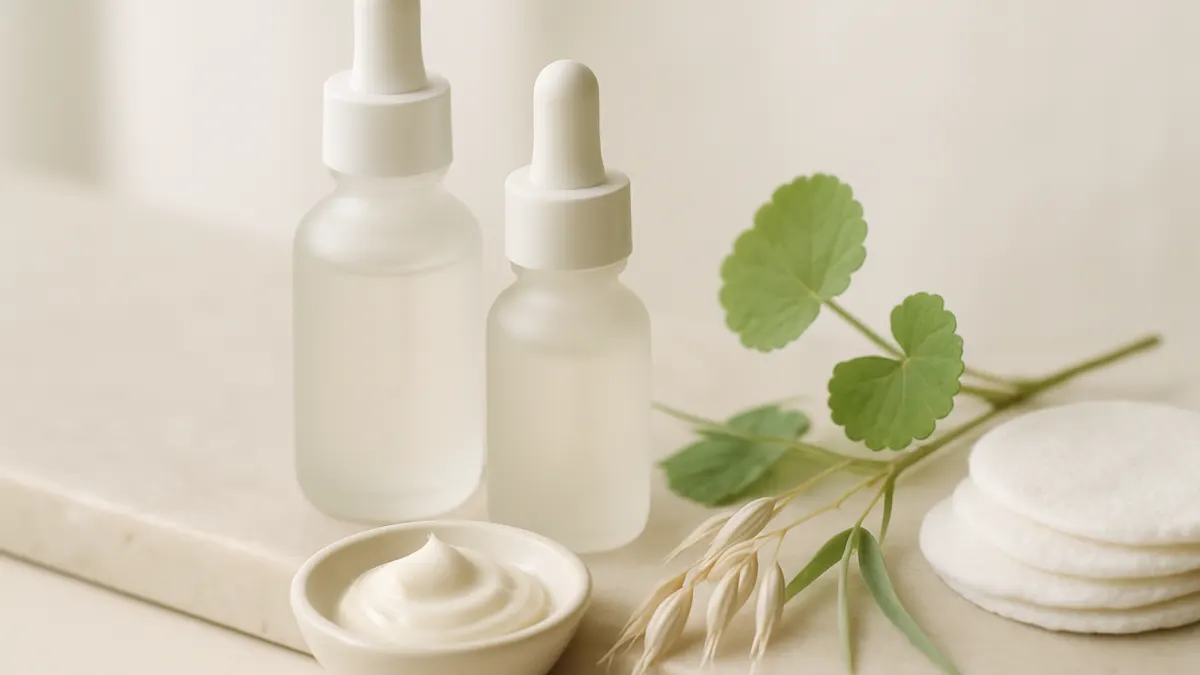
The right facial for sensitive skin should focus on gentle, low-irritant care. Options such as a calming enzyme facial, hydrating barrier repair facial, or customized LED treatment can help support a comfortable skin routine. Soothing ingredients like centella asiatica, oat extract, and hyaluronic acid may be suitable, while fragrance, alcohol, and strong acids are often avoided. Choosing a facial specifically designed for sensitive or reactive skin rather than a standard treatment can help minimize irritation and leave the skin feeling calm and refreshed.
What Is Sensitive Skin, Exactly?
Sensitive skin isn’t a diagnosis so much as a pattern: your skin reacts more quickly and more visibly to products, weather, and touch than most people’s does. That reactivity usually traces back to a weakened moisture barrier, the thin outer layer of skin responsible for locking in hydration and keeping irritants out. When that barrier is compromised, everyday triggers that other skin types tolerate without issue can cause stinging, redness, or breakouts.
Booking professional facial treatments with a licensed esthetician matters more for sensitive skin than for any other type, because a trained eye can assess your barrier health in person and adjust pressure, product selection, and exfoliation intensity before anything touches your face. That individualized approach is difficult to replicate with off-the-shelf, one-size-fits-all products at home.
Sensitivity also isn’t always permanent. Some people are sensitive year-round due to an underlying condition, while others only notice reactivity during winter dryness, after switching skincare brands, or following a sunburn. Recognizing whether your sensitivity is a temporary flare or a long-term pattern helps determine whether a single calming facial will do the trick or whether you need an ongoing, barrier-focused routine.
Common Causes and Triggers of Skin Sensitivity
Sensitivity rarely has a single cause. Instead, it tends to build from a combination of the following:
- A damaged moisture barrier from over-exfoliation, harsh cleansers, or frequent use of strong actives
- Underlying skin conditions such as rosacea, eczema, or perioral dermatitis
- Environmental stress, including wind, extreme cold, dry heat, and sun exposure
- Fragrance and dye sensitivities, common in soaps, laundry detergents, and skincare products
- Hormonal shifts, which can temporarily increase reactivity during pregnancy or certain times of the month
- Over-cleansing or hot water, both of which strip natural oils faster than the skin can replace them
Identifying which of these applies to you helps your esthetician build a treatment plan around the actual cause of your sensitivity, rather than just calming the symptoms for a day or two.
Signs You May Have Sensitive Skin
Not everyone with occasional redness has genuinely sensitive skin, so it helps to look for a consistent pattern rather than a single bad reaction. Common signs include:
- Stinging or burning within minutes of applying a new product
- Visible redness or blotchiness after cleansing, sun exposure, or temperature changes
- Skin that feels tight, itchy, or rough to the touch
- A tendency to break out in small bumps after trying unfamiliar skincare
- Noticeable reactions to fragranced lotions, sunscreens, or laundry products
If several of these sound familiar, it’s worth mentioning to your esthetician before your appointment so the treatment can be adjusted from the start.
What to Look for in a Facial for Sensitive Skin
The most effective treatments for reactive skin share a few common traits. Look for facials and products that include:
- Centella asiatica (cica), oat extract, and chamomile to calm inflammation and reduce redness
- Hyaluronic acid and ceramides to rebuild and reinforce the moisture barrier
- Fragrance-free formulations, since added scent is one of the most common irritant triggers
- Enzyme-based exfoliation instead of physical scrubs or high-percentage acids
- Cooling tools, such as jade rollers or chilled globes, to reduce puffiness without friction
- A patch test on a small area of skin before any new product is applied to the full face
Ingredients and Techniques to Avoid
Just as important as what to seek out is knowing what to steer clear of. Sensitive skin generally does not respond well to:
- Alcohol-based toners and astringents, which strip natural oils and worsen dryness
- Synthetic fragrance and essential oils, both frequent triggers for reactive skin
- High-percentage glycolic or salicylic acid peels, which can be too aggressive for a compromised barrier
- Physical scrubs with rough exfoliating particles, which create micro-tears in already fragile skin
- Aggressive extractions, since sensitive skin bruises and reddens more easily during manual pressure
Types of Facials Best Suited for Sensitive Skin
A handful of treatment styles consistently work well for reactive skin, each suited to slightly different concerns.
Calming Enzyme Facial
Enzyme facials use fruit-derived enzymes, rather than physical scrubs or strong acids, to gently dissolve dead skin cells. This makes them one of the safest exfoliation methods for sensitive skin, since there’s no scrubbing motion or high-strength acid involved.
Hydrating Barrier-Repair Facial
Built around hyaluronic acid, ceramides, and rich moisturizing masks, this treatment focuses on rebuilding a weakened moisture barrier rather than exfoliating aggressively. It pairs especially well with skin that’s sensitive and dry at the same time.
LED Light Therapy
Red light therapy is widely used to calm inflammation and support collagen production without any physical contact or friction, which makes it a comfortable add-on for skin that reacts to touch. Blue light is sometimes layered in for reactive, breakout-prone skin.
Oxygen Facial
Oxygen facials infuse the skin with pressurized oxygen and hydrating serums, delivering a plumping, calming effect with essentially no downtime or irritation risk, making them a gentle option for very reactive or easily inflamed skin.
| Facial Type | Best For | Key Benefit |
| Calming enzyme facial | General sensitivity, reactive skin | Gentle exfoliation without scrubbing or acids |
| Hydrating barrier-repair facial | Sensitive and dry skin | Rebuilds and strengthens the moisture barrier |
| LED light therapy | Redness, rosacea-prone skin | Calms inflammation without physical contact |
| Oxygen facial | Very reactive or easily inflamed skin | Hydration and plumping with minimal irritation risk |
Many guests researching treatments matched to every skin type find that sensitive skin actually overlaps with more than one category, particularly when dryness or occasional breakouts are also part of the picture.
What Happens During a Sensitive-Skin Facial: Step-by-Step
A facial designed for reactive skin generally follows this sequence, with every step adjusted for gentleness:
- Consultation and skin assessment — your esthetician reviews your triggers, current products, and any conditions like rosacea or eczema.
- Gentle double cleanse — a fragrance-free, non-foaming cleanser removes makeup and impurities without stripping the skin.
- Enzyme exfoliation — dead skin cells are dissolved gently, without physical scrubbing or strong acids.
- Minimal or no extractions — pressure is kept light, and aggressive extractions are typically skipped altogether.
- Calming mask — centella asiatica, oat extract, or a hydrating jelly mask soothes redness and reinforces the barrier.
- Cooling massage and moisturizer — a gentle massage with cooling tools reduces puffiness before a barrier-supporting moisturizer is applied.
- Mineral SPF — a fragrance-free, physical sunscreen protects freshly treated skin before you leave.
How to Prepare for Your Appointment
A little preparation goes a long way toward avoiding a reaction during or after your facial:
- Pause retinoids, strong exfoliating acids, and benzoyl peroxide for 48 to 72 hours beforehand
- Skip waxing, tweezing, or at-home hair removal on your face for at least two days prior
- Avoid extended sun exposure in the day or two leading up to your appointment
- Tell your esthetician about any known allergies, current medications, or recent cosmetic procedures
- Arrive with clean, makeup-free skin if possible to simplify the initial cleanse
Aftercare: Protecting Sensitive Skin After Your Facial
What you do in the 24 to 48 hours after a facial matters just as much as the treatment itself. Stick to a gentle, fragrance-free cleanser and the specific moisturizer your esthetician recommends, and hold off on introducing new actives like retinol or vitamin C for at least a day or two. Daily mineral SPF is non-negotiable, since freshly treated skin is more vulnerable to sun damage than usual.
Mild pinkness for a few hours after treatment is normal and typically fades on its own. Consistent, correctly matched treatments also play a role in supporting overall skin health and glow over time, particularly for reactive skin that benefits from a steady, predictable routine rather than frequent product changes.
How Often Should You Get a Facial for Sensitive Skin?
Most estheticians recommend spacing facials four to six weeks apart for sensitive skin, which allows enough time for the barrier to fully recover between sessions. Skin that’s especially reactive may benefit from stretching that interval to six or eight weeks, particularly during winter months when cold air and indoor heating already put extra strain on the barrier. Your esthetician can adjust this schedule based on how your skin responds after each visit.
Professional Facials vs. At-Home Care for Sensitive Skin
At-home routines can maintain results between appointments, but they can’t replace the in-person assessment a professional facial provides. Estheticians use tools like magnifying lamps and steamers to spot early signs of irritation, and they have access to cosmeceutical-grade products and equipment, such as LED devices and oxygen infusion tools, that aren’t available in most retail skincare lines. For sensitive skin in particular, that professional oversight reduces the trial-and-error guessing that often comes with piecing together a routine from products alone.
That said, a simple, consistent at-home routine, built around a gentle cleanser, a barrier-supporting moisturizer, and daily SPF, extends the results of each professional visit and helps prevent flare-ups in between. Think of the two as complementary rather than competing: the facial resets and repairs the barrier in ways home care can’t match, while the daily routine protects that progress until your next appointment.
When Sensitive Skin Needs More Than a Facial
Occasional redness or mild reactivity is a good fit for calming facials, but persistent burning, visible blood vessels, painful bumps, or reactions that don’t settle within a couple of days are signs worth discussing with a dermatologist. A facial can support and maintain healthy skin, but it isn’t a substitute for medical treatment of conditions like rosacea, eczema, or contact dermatitis. Many guests use both: dermatologist-guided treatment for underlying conditions, paired with regular gentle facials to maintain comfort and glow between medical appointments.
Gentle facials suited to reactive skin are available close by, whether you’re located in Holland, Newtown, Richboro, Warminster, Feasterville, or elsewhere across Montgomery County.
Whatever’s driving your skin’s reactivity, the licensed estheticians at Aura Esthetic Spa & Sauna can build a facial plan that calms your skin now while protecting its barrier for the long run.