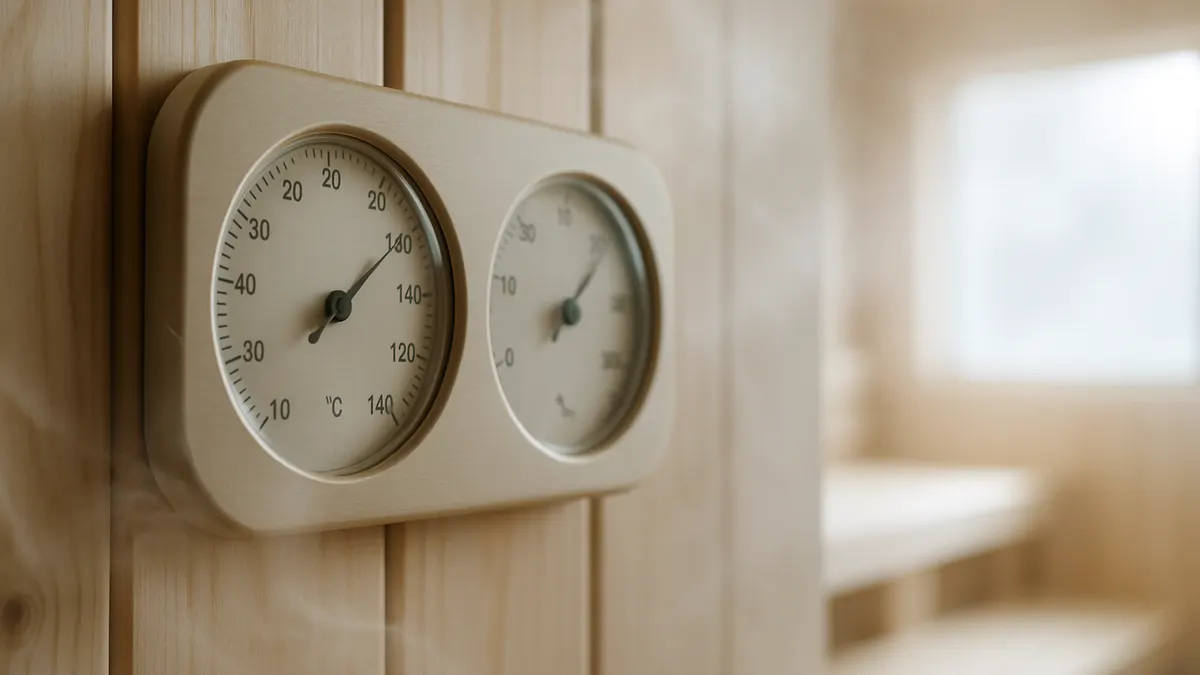
If you’ve never stepped into a sauna before, one question comes to mind right away: how hot should a sauna actually be? The good news is you don’t need the hottest setting to get a good session — the goal for a beginner is simply to get comfortable with the heat, one session at a time.
There’s no single best sauna temperature that works for everyone, since traditional saunas, infrared saunas, and steam rooms all heat the body differently. Below, you’ll find beginner-friendly ranges, how sauna types compare, how long to stay in, how humidity changes the way heat feels, and the signs that tell you it’s time to step out.
What Is the Best Sauna Temperature for Beginners?
For a traditional sauna, a reasonable starting point for most beginners is around 150–165°F (65–74°C). If that still feels intense, start toward the lower end — there’s no rule saying you have to match what an experienced sauna-goer uses.
A few habits make the first few sessions easier: start lower rather than jumping to a high setting, sit on a lower or middle bench instead of the top one, keep your first sessions short, and increase temperature gradually as your comfort builds.
Think of these as starting points, not strict rules. Your ideal sauna temperature depends on the sauna type, humidity level, how long you plan to stay, where you sit, and your own personal heat tolerance.
| Experience Level |
Traditional Sauna Starting Point |
Suggested Session |
| First-time user |
150–160°F |
5–10 minutes |
| Beginner with some experience |
155–165°F |
8–12 minutes |
| Comfortable regular user |
165–180°F |
10–15+ minutes |
Does the Best Sauna Temperature Depend on the Sauna Type?
Yes — sauna temperature isn't one-size-fits-all. The type of sauna you use changes what “hot” actually means.
Traditional Sauna
Traditional Finnish-style saunas use heated air and relatively low humidity, generally running from about 150–195°F (65–90°C). Because this range is wide, beginners should aim for the lower end rather than assuming the highest setting is the “correct” one.
Infrared Sauna
Infrared saunas typically run cooler, usually around 120–150°F (49–65°C). Rather than heating the air around you, infrared heaters warm your body more directly, so a lower thermometer reading can still produce a noticeable heat effect — one reason people describe infrared sessions as feeling different, even at a lower number.
Steam Room
Steam rooms work differently again. Air temperature is much lower than a traditional sauna, but humidity is extremely high, so the room can still feel very intense despite the lower thermometer reading. Since this guide focuses on sauna temperature, we won’t go deep into steam rooms here.
Why Beginners Should Start at a Lower Temperature
Your body needs time to adjust to heat, and that doesn’t happen in one visit. Jumping into a very high temperature on day one can feel overwhelming rather than relaxing, and it doesn’t speed anything up. A longer or hotter session isn’t automatically better, either — a comfortable temperature gives you room to learn how your body responds to heat, and tolerance builds naturally through repeated, moderate exposure, sometimes called heat acclimation. That’s far more practical than trying to power through extreme heat on your first try.
How Long Should a Beginner Stay in a Sauna?
Temperature and time work together. A slightly lower temperature combined with a longer sauna session can feel very similar to a higher temperature with a shorter one. As a starting point: your first session should run around 5–10 minutes, later beginner sessions around 8–15 minutes if comfortable, and any time you feel off, leave earlier — there’s no reason to push through discomfort.
This is one of the most common beginner questions, right alongside temperature. For a deeper look at pacing your sessions, see our guide on how long to stay in a sauna. The key idea: don’t stay in just because a clock says you should. Comfort matters more than hitting a specific number.
How Humidity Changes How Hot a Sauna Feels
Temperature is only half the story — humidity plays a big role in perceived heat. Dry air, typical in a traditional sauna, generally makes higher temperatures feel more tolerable, which is part of why a traditional sauna can run hotter than a steam room and still feel manageable. When water is added to sauna rocks, humidity rises quickly, and the same thermometer reading can suddenly feel much more intense. Beginners should be cautious about adding extra steam until they know how their body handles the base temperature first.
Where Should Beginners Sit in a Sauna?
Not every seat in a sauna feels the same, even though the room shares one thermostat. Heat rises, so the upper bench is almost always hotter than the lower one, sometimes by a noticeable margin. For your first few visits, start on the lower bench and move to the middle bench once you’re comfortable. Choosing your seat is just as much a part of managing heat as the thermostat setting itself.
How to Find Your Personal Best Sauna Temperature
A simple step-by-step approach speeds up the process:
- Start low — around 150–160°F in a traditional sauna.
- Keep the first session short — about 5–10 minutes.
- Pay attention to your body — aim for comfortably hot, not overwhelmed.
- Cool down — step out and let your body cool naturally.
- Adjust gradually — if a few sessions felt comfortable, raise the setting slightly.
You don’t need the hottest setting to have a worthwhile session.
Signs the Sauna Temperature Is Too Hot for You
Don’t try to push through discomfort. Signs the temperature may be too high for you include dizziness, nausea, unusual weakness, headache, feeling faint, difficulty breathing comfortably, or an unusually uncomfortable or racing heartbeat.
If you notice any of these, leave the sauna and cool down — it’s always better to step out early than to tough it out.
Anyone with a medical condition, anyone who is pregnant, or anyone unsure whether sauna use is appropriate for them should talk with a healthcare professional before trying a sauna.
Common Beginner Mistakes to Avoid
A few habits trip up first-timers most:
- Starting at the highest available temperature
- Staying far longer than feels comfortable
- Sitting on the top bench right away
- Ignoring early signs of discomfort
- Forgetting to drink fluids
- Comparing your tolerance to experienced users
- Assuming hotter always means better
Avoiding these makes your early sessions far more enjoyable.
Best Sauna Temperature for Beginners: Quick Reference
| Sauna Type |
General Range |
Beginner Approach |
| Traditional |
150–195°F |
Start around 150–165°F |
| Infrared |
120–150°F |
Start toward the lower end |
| Steam room |
Lower air temperature + high humidity |
Start conservatively |
These are general starting ranges, not strict rules — always follow the manufacturer’s or facility’s posted instructions too. To compare setups further, see our overview of infrared sauna temperature.
Conclusion: Finding Your Comfortable Sauna Heat
There’s no single perfect sauna temperature for everyone — it depends on the sauna type, humidity, session length, where you sit, and your own heat tolerance. For traditional saunas, beginners can start around 150–165°F, keep early sessions short, choose a lower bench, and increase the temperature gradually from there. Pay attention to how your body feels — hotter isn’t automatically better, and finding the best sauna temperature for you is really about comfort, not competition.
If you’re ready to experience it for yourself, Aura Spa Sauna offers a relaxing space to ease into sauna use at your own pace, including sauna solutions near Southampton for anyone looking to get started nearby.
We also welcome guests from nearby communities including Yardley, Feasterville, Holland, Warminster, and Newtown.